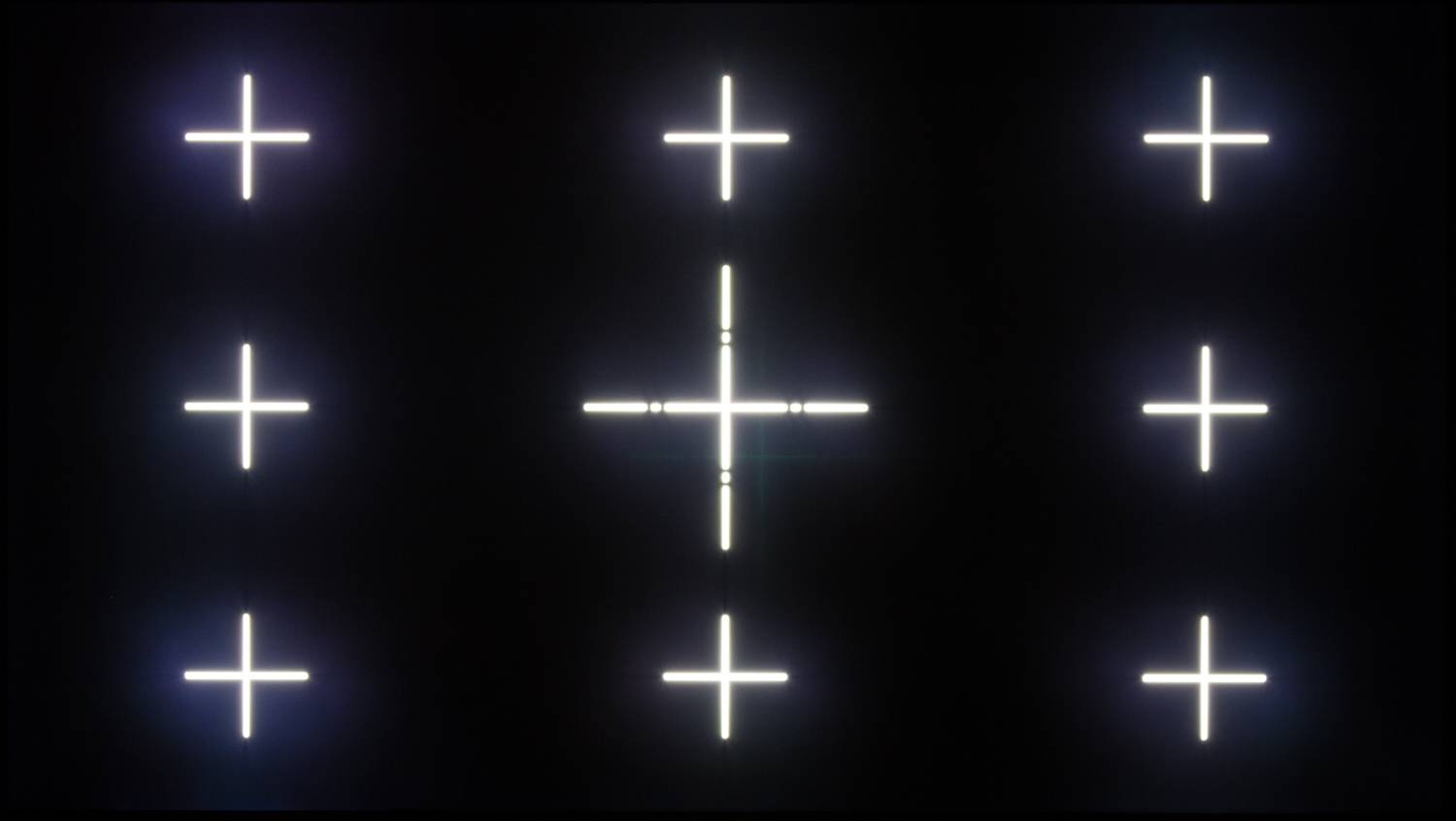
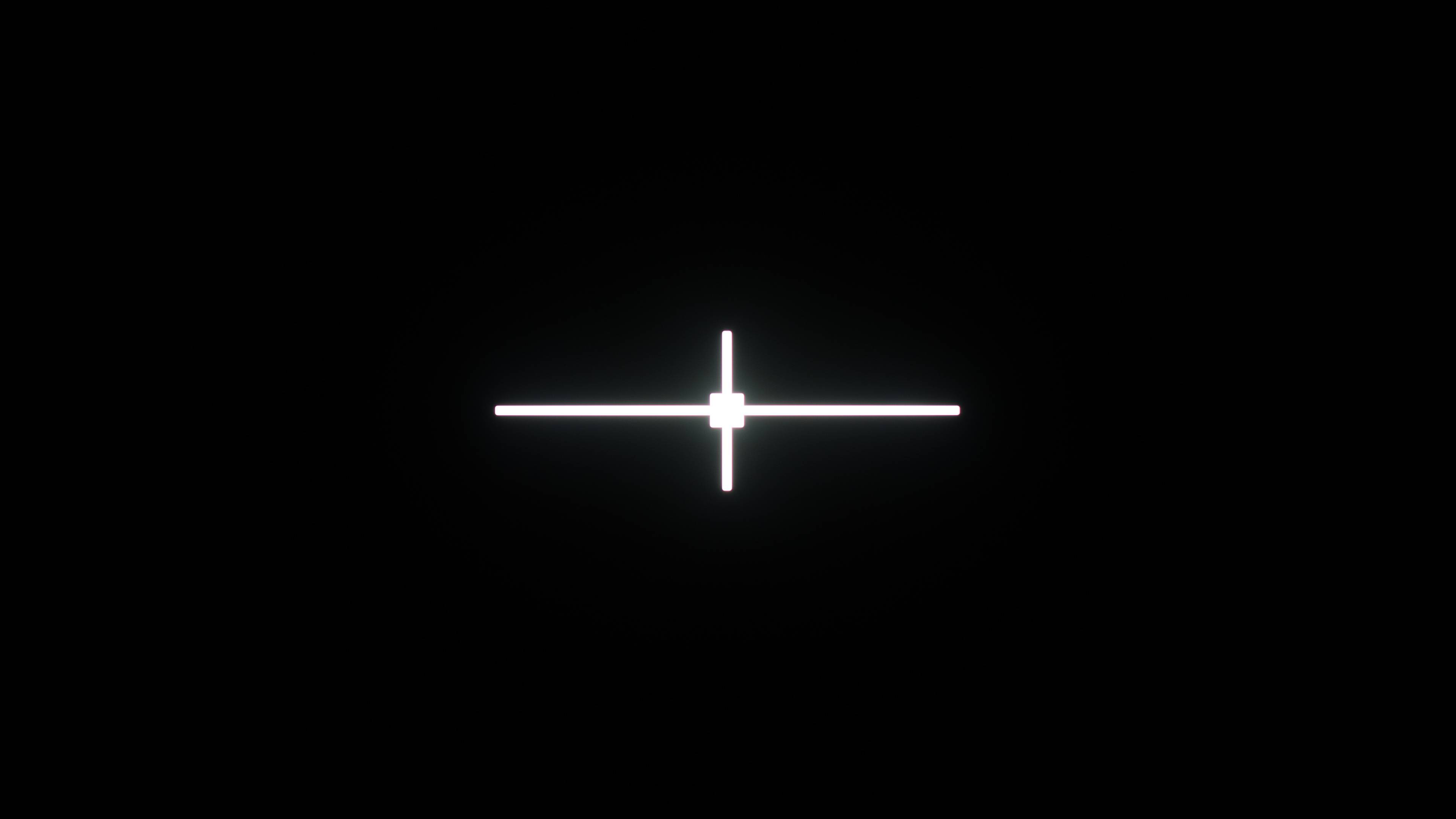
Q9FN’s dynamic backlight system is very aggressive and cannot be turned off completely as it will always try to boost and dim light. When its boosts a part of the picture to illuminate a highlight, it has a tendency to sometimes produce washed out colors, which – like blooming – is most visible in a dark viewing environment.
People sitting off-center from the TV will notice that the aggressive LED backlight produces visual artefacts such as blooming, also during casual daily usage. If you move back to the sweet spot, by which we mean directly in front of the TV, you will rarely notice these light issues. The black bars in movies generally remain black due to the TV’s effective zone dimming system.
In one of the photos below we have enhanced the effect to better show you how these blooming artefacts look. In it, you see a bright element in the picture close to one of the black bars. In actual use, your eyes will not be able to observe both due to how the pupil adapts to the brightest light but you will see things like this occasionally during use. In some of the very brightest movies scenes it is possible to see that the diodes along the edges of the LCD panels light up slightly.
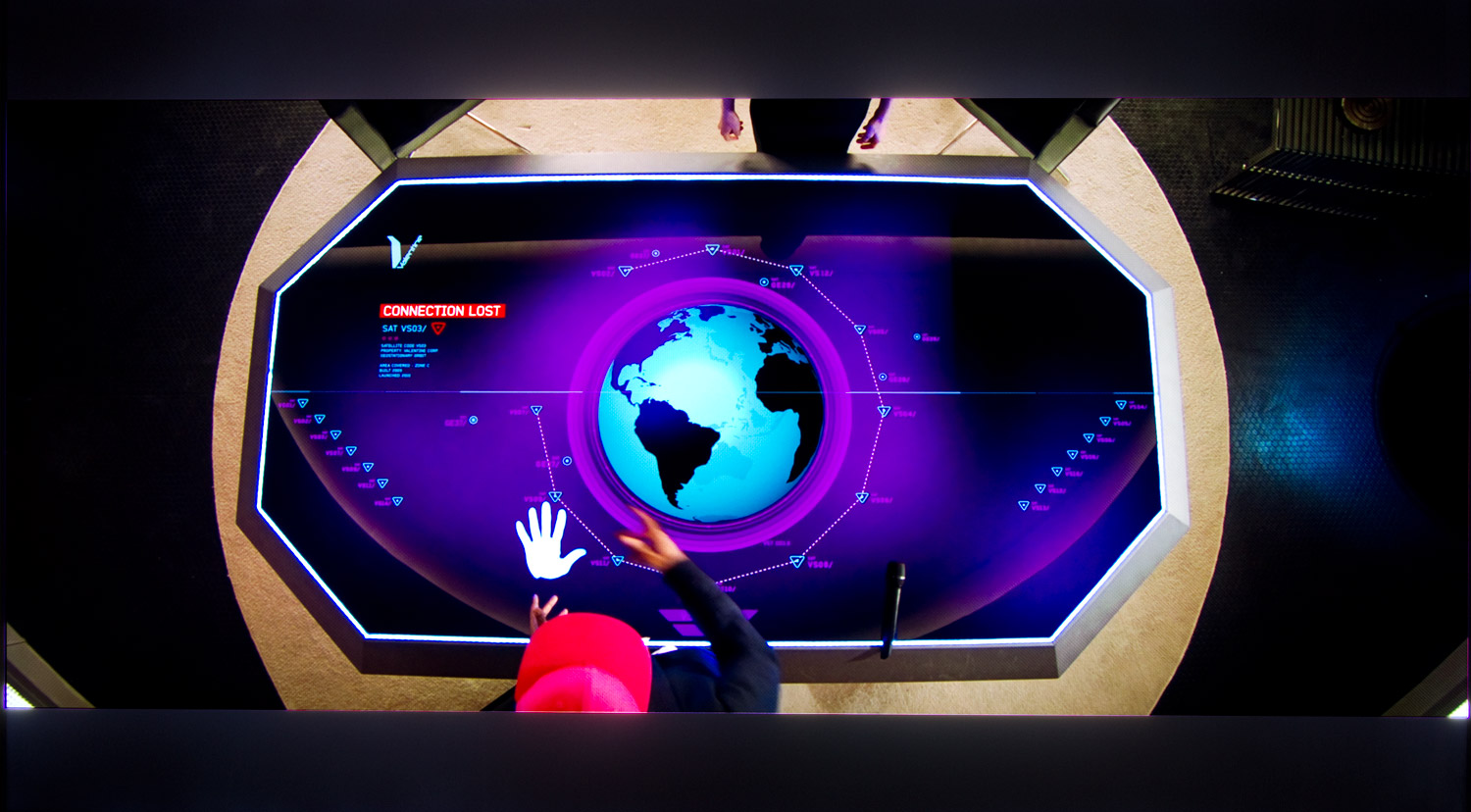
We experienced a problem while watching HDR video that appears to be related to having the dynamic backlight control set to ‘High’. We observed that the light in picture at times pulsated in such a way that the entire picture – not only the highlights – seemed as if it was pulsating/flickering up and down in intensity. The video below is from a scene in Jessica Jones on Netflix (S2:E8 44m40s). Notice how the light is flickering even though there is no change in the actual scene. Look at the wall between the windows to the left in the first scene, and the entire picture in the second scene with the large lamp in the left side of the foreground. It looks almost as if Q9FN’s LED backlight system is confused about how to set its light level and then decides to switch continuously between two brightness levels to compensate in some way, which is distracting to look at.
Our color gradient tests revealed that Q9FN has a tendency to produce posterization / color banding, which could be seen on more than one occasion and mostly when watching movies in highly compressed video quality such as those from iTunes or Netflix.
However, all things considered, picture quality cannot match the best OLED TVs from competing brands.




 LinkBack URL
 About LinkBacks



 Re: Samsung TV line-up 2018
Iniciado por sceips



 .
. , basta con mirar el TV mas barato que encuentres y en paz.
 Citar
Citar

 :
: